Tree pruning in Whitechapel
If you are looking for tree pruning in Whitechapel, you are probably dealing with one of a few common situations: a tree that has become too large for the space, branches hanging over a roof or pavement, reduced light into a flat or shopfront, or simply a tree that needs tidying and shaping to stay healthy. In a busy part of East London like Whitechapel, trees often have to work harder than most. They sit close to buildings, pavements, roads, gardens, courtyards, and shared spaces, which means careful pruning is not just about looks — it is about safety, access, and long-term tree health.
A local tree pruning service can help homeowners, landlords, housing managers, and business owners keep trees in better condition without causing unnecessary disruption. Whether it is a small ornamental tree in a front garden, a mature tree in a communal courtyard, or a line of trees affecting a commercial property, the right pruning approach can make a noticeable difference. Contact us today if you are planning work and want a practical, tidy, and responsible solution tailored to Whitechapel properties.
Tree pruning is not a one-size-fits-all job. Different species, different ages, and different site conditions all affect what should be cut, how much can be removed, and when the work should be carried out. In dense urban areas such as Whitechapel, the presence of narrow access routes, parking restrictions, adjacent properties, overhead utilities, and pedestrian traffic makes experience especially important. That is why local customers often choose a nearby team that understands the area and can plan the work efficiently.
Why tree pruning matters in Whitechapel

Trees in Whitechapel are often part of tight urban settings where every branch can have an effect on light, access, and safety. A well-planned pruning visit can help maintain a tree’s structure while reducing problems such as overhanging growth, blocked windows, crowded canopies, and branches rubbing against buildings. This is particularly relevant for terraced homes, converted flats, rooftop gardens, rear access paths, commercial yards, and shared residential spaces where trees can quickly become intrusive if left unmanaged.
Proper pruning also supports tree health. Removing dead, damaged, diseased, or crossing branches can improve airflow and reduce the chance of decay spreading through the crown. In a city environment, trees may already face stress from compacted soil, limited rooting space, pollution, or past poor maintenance. Careful pruning helps the tree use its energy more effectively and reduces the likelihood of sudden limb failure during windy weather.
For many customers, the biggest reason to arrange pruning is peace of mind. You may be worried about a branch hanging over a path, leaves blocking gutters, or a tree becoming unbalanced after years of uneven growth. In those situations, a local service is useful because the work can be assessed with the practical realities of Whitechapel in mind — busy streets, limited parking, and the need to complete the job with minimal inconvenience to neighbours, tenants, and customers.
What tree pruning can help with
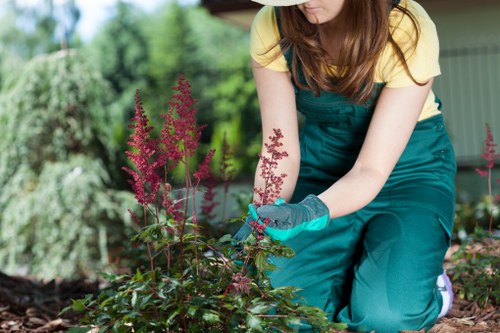
Tree pruning in Whitechapel is often requested for very specific reasons. Some customers want to protect a building from branch contact, while others want to improve the look of a frontage or restore light into a garden or upper floor room. In many cases, the same tree may need several small corrections rather than one heavy cut, especially if it is close to a property boundary or public pavement.
Common reasons people ask for pruning include:
- Reducing overhanging branches near roofs, gutters, fences, or neighbouring gardens
- Improving natural light into rooms, courtyards, and shared outdoor areas
- Removing dead, diseased, or broken limbs
- Shaping young trees for better long-term structure
- Preventing branches from obstructing signs, windows, access routes, or CCTV sightlines
- Managing growth near roads, footpaths, and driveways
- Keeping trees tidy around shops, offices, and hospitality premises
Pruning can also be used to manage fruit trees, ornamental trees, and trees that have become too dense. If done well, it should leave the tree looking natural rather than heavily cut back. A skilled team will aim to make clean, sensible cuts and avoid practices that can stress the tree unnecessarily. For customers in Whitechapel, that balance matters because the visual appearance of a tree often affects the look of the whole property.
Our tree pruning service for Whitechapel properties

Every property is different, and the best pruning plan depends on the tree, the site, and the customer’s goals. Some jobs require light crown thinning to improve airflow and daylight. Others may need crown reduction to bring the canopy back to a manageable size. In some cases, selective branch removal is the most appropriate approach, particularly where a tree is growing near buildings or where access is restricted.
We work with a wide variety of local property types, including period houses, modern apartment blocks, mixed-use buildings, commercial units, retail frontages, private gardens, communal courtyards, and managed estates. Whitechapel’s built environment can make even straightforward tree work feel more complicated, so a good service should be organised, tidy, and respectful of surrounding residents and businesses.
Our approach focuses on practical outcomes. That means understanding what the customer needs, inspecting the tree carefully, and carrying out the work in a way that supports both appearance and safety. Book your service now if you want pruning that is planned around your property rather than handled as a rushed one-off cut.
Types of pruning commonly requested
Different trees and different situations call for different pruning methods. The right choice depends on the species, the tree’s age, its condition, and the space it has to grow. In Whitechapel, where trees often sit close to hard surfaces and structures, the most appropriate method is usually the least disruptive one that still solves the problem.
Some of the most common pruning types include:
- Crown reduction – reducing overall canopy size while maintaining a balanced outline
- Crown thinning – selectively removing some branches to let in more light and air
- Crown lifting – removing lower branches to increase clearance for pedestrians, vehicles, or access
- Deadwood removal – taking out dead, broken, or unsafe branches
- Selective branch removal – addressing specific problem limbs that overhang or rub
- Formative pruning – shaping young trees early to encourage strong structure
Not every tree should be reduced heavily, and not every problem requires a major cut. A careful inspection should always come first. That is especially important in an area like Whitechapel, where trees may be part of a shared boundary, a managed landscape, or a protected streetscape. A sensible pruning plan helps avoid avoidable stress on the tree while still meeting the customer’s needs.
Local challenges that affect tree work in Whitechapel
Working in Whitechapel often means dealing with real-world site constraints that are less common in suburban settings. Streets can be busy, parking can be limited, and access routes may be narrow or shared. Many properties sit close together, so it is important to plan pruning work carefully to avoid inconvenience and to respect adjoining occupiers.
Some of the local factors that matter include:
- Restricted parking and loading space for equipment
- Narrow side access or rear access through communal areas
- Ground floor businesses that need to stay open or accessible
- Foot traffic near shopfronts, schools, stations, and busier roads
- Neighbouring windows, balconies, and roofs close to the tree canopy
- Overhead cables or nearby utilities that require extra caution
Because of these conditions, a local team can be especially useful. A crew familiar with Whitechapel and nearby areas such as Spitalfields, Stepney, Aldgate, Bethnal Green, Shadwell, and Wapping is more likely to anticipate site issues before they become delays. That means better planning, smoother work, and less disruption for residents and businesses.
How the pruning process usually works

Customers often want to know what happens from the first enquiry to the completion of the work. While every site is different, a typical tree pruning visit follows a clear and straightforward process. It starts with an assessment of the tree, the surrounding area, and the customer’s main concerns. This helps decide whether the work is focused on safety, appearance, clearance, or all three.
The process may include the following steps:
- Initial discussion – understanding what the customer wants to achieve and any access concerns
- Site assessment – checking the tree’s condition, size, species, and location
- Pruning plan – deciding which branches to remove and which technique is most suitable
- Work setup – preparing equipment and protecting the surrounding area where needed
- Careful pruning – carrying out the cuts in a controlled and tidy way
- Clear-up – removing debris and leaving the site neat and usable
For many customers, the key benefit is that the whole job is managed with minimal fuss. You do not want branches left in a shared alley or cuttings blocking an entrance. You want a service that treats your property with care and respects the practical realities of local access, neighbours, and day-to-day use.
What is included in a professional pruning service
When people book tree pruning in Whitechapel, they usually want more than someone just cutting branches. They want a service that is planned, safe, and considerate. A proper pruning job should be tailored to the tree and the site rather than treated like a quick tidy-up.
A professional service often includes:
- Assessment of the tree’s condition and growth pattern
- Discussion of the customer’s main concerns and priorities
- Selection of an appropriate pruning method
- Removal of dead, damaged, or unwanted growth
- Attention to shape, balance, and future growth
- Cleanup of branches and green waste from the work area
- Careful consideration of nearby property and access issues
Important: pruning should be done with the tree’s future health in mind. Heavy or repeated poor cuts can lead to weak regrowth, stress, or decay. That is why many local customers prefer a service that takes the time to do the work properly rather than just aggressively reducing the canopy.
Benefits for homeowners, landlords, and businesses
Tree pruning can benefit many different types of customers in Whitechapel. Homeowners often want more daylight, a tidier front garden, and reduced risk from overhanging branches. Landlords and property managers may need to maintain shared spaces, address tenant concerns, and keep trees in line with ongoing property care. Business owners may want the exterior of the building to look neat and welcoming while keeping signs, entrances, and display windows clear.
For residential customers, pruning can help by:
- Improving light into rooms and gardens
- Reducing debris falling onto roofs, patios, and pathways
- Making outdoor spaces feel more usable
- Helping trees remain attractive and in proportion with the property
For commercial customers, pruning can help by:
- Keeping entrances and signage visible
- Reducing interference with customers, staff, or deliveries
- Maintaining a neat presentation for the building
- Supporting safer movement around external access points
Good pruning is both practical and visual. It should make the tree work better for the property without making the site feel stripped or overworked.
When is the best time to prune trees?
Timing matters, although the best time depends on the type of tree and the reason for the work. Some trees are better pruned during dormant periods, while others can be managed at different times of year if the work is light and appropriate. In an urban area like Whitechapel, schedule can also be influenced by access, occupancy, customer opening hours, or the need to avoid peak footfall times.
As a general rule, it is worth arranging pruning when you first notice a problem rather than waiting until branches start causing damage or obstruction. Signs that a tree may need attention include:
- Branches touching or rubbing against buildings
- Dead limbs visible in the canopy
- Reduced daylight from dense growth
- Uneven or lopsided growth
- Branches hanging too low over paths or driveways
- Wind-damaged or split limbs
H4: If you are unsure whether now is the right time, it is usually worth having the tree assessed. A small amount of timely pruning can prevent a larger and more disruptive job later.
Preparation checklist before your pruning appointment
Good preparation helps the work run smoothly, especially in Whitechapel where access can be tight and timing matters. If you are booking a pruning service for a home, block, or business, it helps to have a few details ready in advance.
- Identify which tree or trees need attention
- Note the main issue: light, safety, clearance, shape, or damage
- Check whether the tree is in a private garden or shared area
- Make sure access gates, side passages, or communal entrances can be used
- Move vehicles, bins, garden furniture, or fragile items if needed
- Let neighbours or building managers know if the work may affect them
- Tell the team about any concerns such as roofs, cables, or nearby glass
H5: If the tree sits close to a boundary, it is especially useful to know where the relevant access points are and whether any permission or coordination is needed. This helps prevent delays and avoids confusion on the day.
Pricing factors for tree pruning in Whitechapel
Customers often ask what affects the cost of pruning. While exact prices depend on the site and the job, several practical factors usually influence the quote. The aim is to make sure the work is properly planned, safe to carry out, and suitable for the tree’s condition.
Pricing factors can include:
- Tree size and height
- Species and density of growth
- How much material needs to be removed
- Access restrictions or difficult working conditions
- Proximity to buildings, roads, or neighbouring properties
- Whether the job needs specialist equipment
- Disposal of branches and green waste
In Whitechapel, access and logistics often matter just as much as the tree itself. A tree that is not especially large may still take careful planning if it is in a courtyard, on a busy street, or behind a building with little direct access. A responsible quote should reflect those realities rather than relying on assumptions from the road side.
Why choose a local tree pruning company?
Choosing a local company for tree pruning in Whitechapel has real advantages. A nearby team is more likely to understand local street layouts, property styles, access limitations, and the day-to-day challenges of working in a busy East London area. That familiarity can save time and make the whole experience smoother.
Local knowledge is useful because it helps with:
- Planning around restricted parking and loading
- Understanding shared access in terraces and converted buildings
- Managing work near busy pedestrian routes
- Coordinating with residential and commercial schedules
- Responding quickly when tree issues need attention
It also means a more practical conversation from the start. A local arborist or tree care team can often tell you whether the work is likely to be straightforward, whether the tree needs a lighter touch, or whether access will require extra planning. That kind of advice is especially valuable when the tree is close to a roof, boundary, pavement, or business frontage.
Areas covered around Whitechapel
Tree pruning services based around Whitechapel often cover the surrounding parts of East London as well. This can be useful if you manage more than one property or need similar work on different sites in the area.
Nearby locations commonly include:
- Stepney
- Spitalfields
- Aldgate
- Bethnal Green
- Shadwell
- Wapping
- Commercial Street and nearby mixed-use districts
If you manage properties across different neighbourhoods, using one local tree service can make scheduling and communication easier. It also helps ensure that the same practical approach is applied across each site, whether the trees are in a small courtyard, alongside a commercial entrance, or in a shared residential space.
Frequently asked questions
Do all trees need pruning every year?
No. Some trees need only occasional light maintenance, while others may require more regular attention depending on species, age, location, and how fast they grow. The right schedule depends on the tree and the site.
Will pruning damage my tree?
When done correctly, pruning should support the tree rather than harm it. The key is to remove only what is necessary and to avoid over-cutting. Poor pruning, on the other hand, can weaken the tree or lead to unhealthy regrowth.
Can pruning help with blocked light?
Yes. Crown thinning or reduction can often improve daylight into a room, garden, or courtyard. The amount of improvement depends on the tree’s size and density, as well as how much work is appropriate for the species.
What if my tree is near a building or boundary?
That is very common in Whitechapel. The work simply needs to be planned carefully. A local team should assess the nearby structures, access routes, and any shared areas before deciding on the best method.
Can you prune trees outside shops or commercial units?
Yes. Trees in commercial settings often need pruning to improve appearance, maintain access, and keep entrances clear. Timing can be arranged to reduce disruption to staff and customers.
Do I need to prepare anything before the work starts?
It helps to clear access where possible, move vehicles or items that may be in the way, and let anyone affected know about the visit. If the tree is in a shared space, coordination with neighbours or building management is often useful.
Book tree pruning in Whitechapel
If your tree is becoming too large, blocking light, dropping branches, or interfering with the use of your property, it may be time to arrange professional pruning. A local team can help you choose the right approach for your tree and site, whether that means light shaping, crown work, deadwood removal, or selective branch reduction. The goal is always to make the tree safer, better balanced, and more suitable for the space it is in.
Request a free quote if you would like to discuss a one-off job or regular tree maintenance for a home, block, or business in Whitechapel. With the right pruning plan, your tree can remain an asset to the property rather than a source of ongoing concern. Book your service now and get the work handled in a way that suits local access, local conditions, and your schedule.
Whether you are in the heart of Whitechapel or nearby in Stepney, Spitalfields, Aldgate, Bethnal Green, Shadwell, or Wapping, a local tree pruning service can make the process simpler from start to finish. If you want practical advice and a tidy finish, contact us today to arrange a visit and take the next step toward safer, healthier, better-managed trees.